Emei Mountain Scenic Area, including Leshan Giant Buddha Scenic Area
Introduction
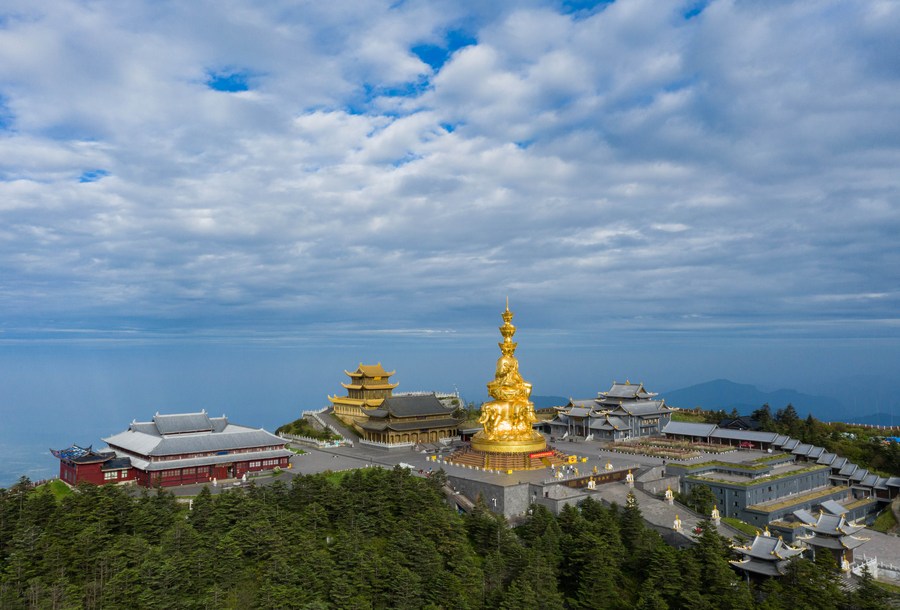
The Emei Mountain Scenic Area, located in Southwest China's Sichuan province, is recognized for its striking scenic beauty, cultural heritage, and spiritual significance. Emei Mountain, one of the four sacred Buddhist mountains in China, stands as a testament to the harmonious blend of natural and cultural elements. Emei Mountain offers a diverse range of natural environments across its 60-kilometer trail, featuring high peaks, deep gullies, and a rich biodiversity. The region is home to numerous endangered and endemic species, and its unique geological features are of significant scientific interest. The mountain's cultural and spiritual heritage is equally rich, with over 30 temples nestled amidst its lush vegetation, each reflecting the architectural brilliance of traditional Chinese temple design.
The Leshan Giant Buddha, also known as the "Lingyun Giant Buddha", is a 71-meter tall stone statue carved into the hillside near the Lingyun Temple. It is located at the meeting point of the Dadu, Qingyi, and Minjiang rivers. The construction of this magnificent statue started in 713 and was finished in 803.
In 1996, the Emei Mountain Scenic Area, including the Leshan Giant Buddha, was designated a UNESCO World Cultural and Natural Heritage Site, highlighting its importance as a precious legacy of both natural beauty and cultural history. This area is not only a popular tourist destination but also a site of pilgrimage, drawing visitors from all over the world to experience its serene landscapes and profound spiritual ambiance.
History
The history of Emei Mountain extends over two millennia, with its Buddhist cultural heritage dating back to the early Buddhist communities that settled here. It has been a prominent center for Buddhism in China, attracting monks and scholars seeking enlightenment amidst its tranquil landscapes. Over the centuries, numerous temples and monasteries were established, each contributing to the mountain's reputation as a sacred site of religious learning and practice.
The Leshan Giant Buddha, another historical marvel, was commissioned during the Tang Dynasty (618–907). Construction began in 713 AD and concluded in 803 AD, under the guidance of a Buddhist monk named Haitong. The project aimed to calm the turbulent waters at the river confluence below, which posed a threat to passing vessels. The colossal Buddha statue stands as a testament to the ingenuity and devotion of the craftsmen who, over 90 years, meticulously carved it from the cliff face.
Throughout its history, Emei Mountain has been a refuge for spiritual seekers and a symbol of cultural resilience. During the Ming (1368–1644) and Qing (1644–1911) dynasties, it continued to flourish as a religious site, with many of its temples and cultural relics being preserved and expanded. The legacy of Emei Mountain and the Leshan Giant Buddha as centers of cultural and spiritual significance remains unbroken, with both continuing to inspire awe and reverence in visitors today.
Geography and Natural Resources
Emei Mountain's geography is characterized by its varied topography and diverse ecosystems. Stretching over 154 square kilometers, the mountain rises from an elevation of 500 meters at its base to a peak of 3,099 meters at the Golden Summit. This altitude gradient creates a range of climatic conditions, allowing for a rich diversity of flora and fauna. The mountain is home to over 3,200 plant species, many of which are rare or endangered. Its forests provide habitat for over 2,300 animal species, including the giant panda and the lesser panda, both under state-level protection.
The mountain's geological structure is equally remarkable, featuring late Precambrian sedimentary strata and significant stratigraphic sequences of Emei Mountain basalt from the late Permian period. These formations contribute to the mountain's dramatic landscapes, characterized by high peaks, deep valleys, and striking rock formations. Natural phenomena such as the "Buddha's halo" and holy lights further enhance the mountain's mystical allure, drawing both tourists and researchers interested in its unique environmental conditions.
The natural resources of Emei Mountain are not limited to its biological diversity; the area is also known for its geothermal hot springs. These springs, rich in radon and sulfur, are believed to offer health benefits and have contributed to the mountain's reputation as a "hot spring capital." The combination of natural beauty, biodiversity, and mineral resources makes Emei Mountain a site of both ecological importance and recreational appeal.
Cultural Significance
Emei Mountain holds profound cultural significance as one of China's four sacred Buddhist mountains. It has been a center of Buddhist thought and practice for centuries, attracting countless pilgrims and spiritual seekers. The mountain's numerous temples and monasteries are not only places of worship but also repositories of cultural treasures, including sculpture, stone inscriptions, calligraphy, and paintings. These artifacts reflect the rich artistic and spiritual heritage that has developed over the mountain's long history.
The architectural design of the temples on Emei Mountain is noteworthy for its integration with the natural landscape. Built on hillsides and utilizing the mountainous terrain, these structures exemplify the ingenuity and craftsmanship of traditional Chinese architecture. The temples are also associated with important cultural rituals and festivals, such as the Emei Mountain Ice, Snow, and Hot Spring Festival, which celebrates the mountain's seasonal beauty and spiritual significance.
The Leshan Giant Buddha, a cultural treasure in its own right, embodies the spiritual aspirations of the Buddhist community that created it. As the tallest stone Buddha sculpture in China, it is a symbol of the harmony between human creativity and the natural world.
Attractions
Emei Mountain
Emei Mountain, with its breathtaking landscapes and profound spiritual ambiance, is a major attraction for visitors. The mountain offers a variety of scenic vistas, from the lush forests at its base to the snow-capped peaks at its summit. The Golden Summit, at an elevation of 3,099 meters, is a highlight for many, providing panoramic views of the surrounding landscapes and phenomena such as the Sea of Clouds and Buddha's Aureole. The mountain's diverse ecosystems and rich biodiversity add to its allure, making it a haven for nature lovers and outdoor enthusiasts.
The architectural and cultural heritage of Emei Mountain is equally compelling, with over 30 temples scattered across its slopes. Each temple is a testament to the mountain's long-standing spiritual significance, offering visitors a glimpse into the history and traditions of Chinese Buddhism. The mountain's trails, ranging from gentle paths to challenging hikes, allow visitors to explore its natural beauty and cultural sites at their own pace.
Leshan Giant Buddha
The Leshan Giant Buddha, carved out of a cliff face during the Tang Dynasty, is an iconic symbol of China's cultural heritage. Standing 71 meters tall, it is the largest stone Buddha in China and a masterpiece of ancient engineering.
Visitors to the Leshan Giant Buddha can explore the surrounding area, which includes more than 90 stone carvings and Buddhist shrines. These sites offer insight into the artistic and religious traditions of the period, showcasing the skill and devotion of the craftsmen who created them. The integration of the Buddha statue with the natural landscape highlights the harmonious relationship between human art and the environment, making it a must-see attraction for those interested in history, culture, and spirituality.
Tourism
Emei Mountain Scenic Area, including the Leshan Giant Buddha, is a popular destination for both domestic and international tourists. Its natural beauty, cultural significance, and spiritual ambiance attract millions of visitors each year. The area's accessibility has been enhanced by modern infrastructure, including a high-speed railway linking Chengdu and Guiyang, which allows for convenient travel to the site.
Tourism in the region is well-supported by a range of facilities and activities. Visitors can enjoy a variety of experiences, from hiking and sightseeing to cultural tours and spiritual retreats. The area's hot springs and ski resorts offer additional recreational opportunities, catering to a wide range of interests and providing year-round attractions.
Local authorities actively promote sustainable tourism practices to preserve the natural and cultural heritage of the area. Efforts are focused on minimizing the environmental impact of tourism while enhancing the visitor experience through improved infrastructure and services. Educational programs and guided tours are available to help visitors understand and appreciate the significance of Emei Mountain and the Leshan Giant Buddha.
Conservation Efforts
Conservation efforts in the Emei Mountain Scenic Area are critical to preserving its unique natural and cultural heritage. The area's designation as a UNESCO World Heritage Site underscores the importance of protecting its diverse ecosystems and historical sites. Local and national authorities work in collaboration with international organizations to implement conservation strategies aimed at safeguarding the region's biodiversity and cultural treasures.
Key initiatives include habitat restoration, protection of endangered species, and management of visitor impact. The mountain's rich biodiversity is monitored through scientific research and ecological surveys, while efforts are made to prevent deforestation and habitat degradation. Conservation programs also focus on preserving the architectural integrity and cultural significance of the region's temples and historical sites.








